|
|
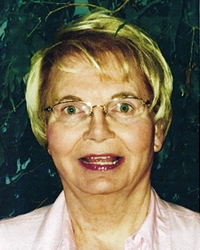
JoAnne Bland
JoAnne Wheeler Bland is a graduate of the University of Kentucky with a B.S. in Business & Economics and a J.D. in Law. JoAnne was an active trial lawyer and served as a Special Justice on the Kentucky Supreme Court. JoAnne has served as Vice-President of the Kentucky Fairness Alliance; the Kentucky Council on Postsecondary Education Committee on Equal Opportunity; the Fairness Campaign Board; the UK LGBTQ Alumni Board; President of the Democratic Woman's Club of Hardin County; 1st Associate Director of Congressional District 2 of the Democratic Woman's Club of Kentucky; Treasurer of the Hardin County Democratic Executive Committee; a member of the National Federation of Democratic Women Legislative Committee; and spoke at the 50th Anniversary Celebration of Kentucky's Civil Rights Act. She speaks on behalf of the Kentucky Bar Association on Diversity and Inclusion, and recently was selected as a member of the 2018 Class of Emerge Kentucky.
JoAnne has and continues to believe strongly in the ACLU as providing a voice for the voiceless and a defender for the defenseless – for those whose Civil and Human Rights have been violated. Over her entire career, JoAnne has and continues to use her talents and abilities to fight injustice, intolerance, discrimination, and unfairness. With her past education, legal experience, political connections, and as a woman who has faced her own extreme discrimination for being a married lesbian and transgender woman – JoAnne will bring empathy, caring and concern to the ACLU of Kentucky Board of Directors.
|
|
|
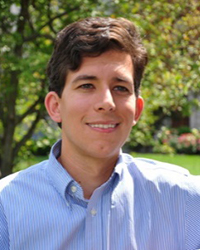
Jason Crosby
In a letter entitled "The Mistery and The Iniquity" written by Baptist Thomas Helwys to the King of England in 1612, Helwys wrote the following: "For men's religion to God is between God and themselves. The King shall not answer for it. Neither may the King be judge between God and man. Let them be heretics, Turks, Jews, or whatsoever; it appertains not to the earthly power to punish them in the least measure. This is made evident to our Lord the King by the scriptures." On this side of the Atlantic, Roger Williams, founder of the Colony of Rhode Island and the first Baptist church in America, wrote in 1638 that he hoped to create "a shelter for persons distressed by their conscience." In the latter part of the 18th century, James Madison was appalled when he learned that many Baptist ministers had been jailed in his native Virginia for preaching without a license. With the help of Baptists, Madison and Thomas Jefferson brought the Bill for Establishing Religious Freedom before the Virginia Legislature in 1777. The Bill sought to guarantee freedom of conscience and to separate the exercise of religious expression from the power of the state. The Virginia Experiment, as it came to be known, served as the foundation for the first part of the First Amendment to the United States Constitution.
I share this bit of Baptist history, not in an attempt to convert (or bore) you. I share it because contrary to the prevailing common and justified perception of Baptists in our nation at the moment, some Baptist ministers still believe that creating a society where all people, no matter their race, religion, gender, or sexual orientation possess the freedom to fully be who they were created to be is sacred work. Advocating for separation of church and state, equal rights for LGBTQ people, equal access to the voting booth, women's reproductive rights, is sacred work. The ACLU of Kentucky is doing that work. I would be honored to participate in your effort by serving on The ACLU of Kentucky Board of Directors.
|
|
|
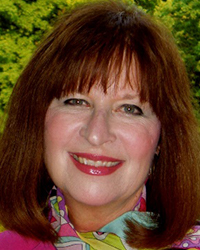
Jessica Loving
My belief in the work of the ACLU has motivated me to become more actively involved again with the ACLU of Kentucky. I first learned about the ACLU as a teenager in 1967 when the Loving v. Virginia Supreme Court decision caught my family's attention.
As executive director of the ACLU of Kentucky in the late 1970s and later as a board member of the local and national ACLU, I learned about the ACLU's many contributions and the challenges faced in its almost 100-year history. Threats to civil liberties are as great now as in the 1950s and perhaps even greater than in the early '70s when I first became involved in civil rights and reproductive rights work.
Today we are experiencing serious, regressive – and repressive – government actions. Additionally, the rise of white nationalist groups represents a special challenge to efforts to preserve the rights established by the U.S. Constitution while protecting public safety. Perhaps my professional experience in public relations and marketing communications and volunteer experience with a number of social-justice groups can be used to assist and enhance the excellent work being accomplished locally by the staff and board of the ACLU of Kentucky.
|
|
|
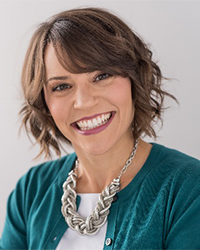
Bridget Pitcock
I work as an assistant nurse manager at Norton Women's & Children's Hospital in Louisville where I specialize in treating and providing education to patients with cardiovascular and pulmonary diseases.
For as long as I can remember, I have been an advocate for the rights of people. As a young person, I learned the importance of seeking, supporting, and protecting accessibility and better healthcare for my father, a Vietnam Veteran, who was paralyzed while serving in combat. As a senior in high school, I participated in the Kentucky YMCA Youth Association's Service to the South. On the 10-day trip, I participated in community service being educated on the Civil Rights Movement. As a junior in college and a queer woman, I served as temporary co-organizer for the "No on the Amendment" Campaign in Bowling Green, KY. After college, I volunteered for a year with AmeriCorps NCCC (National Civilian Community Corps) as a team leader providing disaster relief and rebuilding services to those affected by Hurricanes Katrina & Rita. Professionally, I was instrumental in building awareness for opioid drug abuse and developing case management techniques to combat opioid addiction.
In 2016, I was asked to lend my expertise as a nurse for the University of Louisville Medical School LGBTQ community advisory panel. I have always sought ways to make a difference and protect the basic human rights deserved by all people. I believe serving as a member of the board for ACLU Kentucky is a powerful next step in helping the community build capacity for fairness, equality, and freedom.
|
|
|
Soha Saiyed
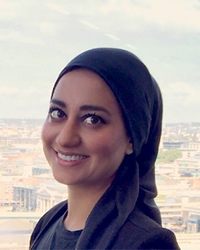
Soha is an attorney with the law firm Abney Law Office. She represents workers who have experienced discrimination, harassment, and retaliation. Formerly, Soha was a staff attorney with the Legal Aid Society. She served rural, low-income Kentuckians in such areas as landlord-tenant, foreclosure, consumer, and family law.
Soha is from Shelby County, Kentucky. She received her B.A. from Bellarmine University and J.D. and M.B.A. degrees from the University of Louisville. Soha is a member of several community organizations, including serving as co-chair of the Nelson and Shelby County Human Trafficking Task Forces. Soha also hosts the Queencast, a weekly podcast featuring a diverse group discussing life, current events, and pop culture.
|