The message:
Authoritarian politicians like Trump and his cronies in ultra-conservative states are targeting, harassing, and harming immigrants and refugees, trans people, people seeking reproductive health care, protestors, and other vulnerable communities. To carry out these abuses of power, government agents are increasingly using powerful surveillance technologies owned by private companies — companies that are being funded by our tax dollars to help the government track us, our family and friends, and our neighbors.
An example are automatic license plate readers (ALPRs). These are systems run by companies like Flock that capture and store license plate numbers along with time and location data. This means that companies like Flock are creating detailed records about where everyday people live, work, worship, seek care, and gather to organize.
ICE has already been caught accessing ALPR data in Oregon. In Texas, law enforcement used Flock cameras as part of an “abortion investigation” and had access to data from cameras across the country including Illinois and Washington.
In Oregon’s State Legislature, the ACLU of Oregon has been advocating for strong safeguards on law enforcement’s use of ALPR systems in our state. Unfortunately, the bill that has recently emerged from the Senate Judiciary Committee reflects significant concessions to law enforcement and surveillance companies, leaving out key protections Oregonians need.
The recipient:
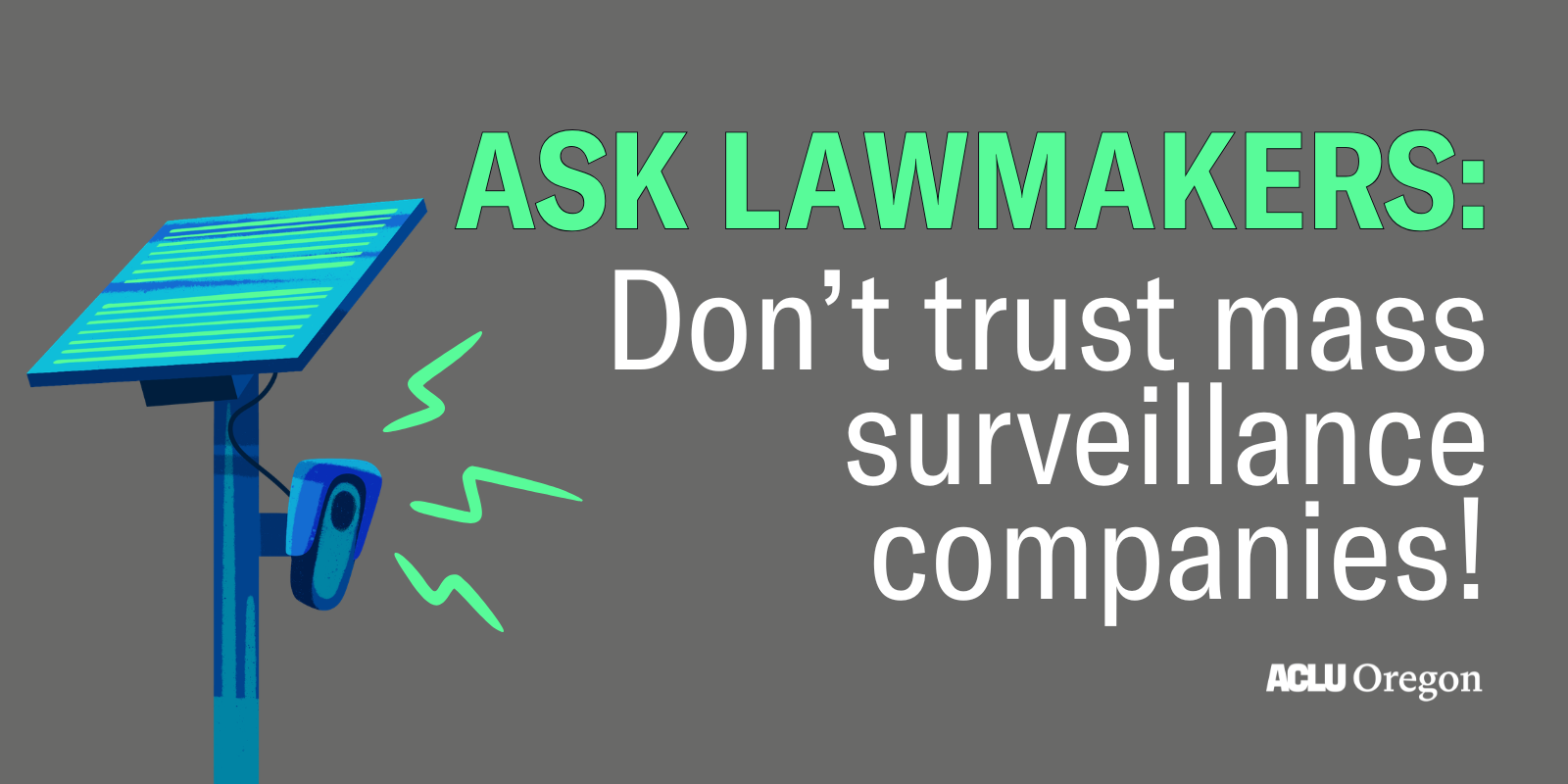
Tell your Oregon Representatives: Protect Oregonians, not mass surveillance companies!
The impact:
Our lawmakers must stay strong and resist pressure from Flock and other surveillance companies by putting real protections into SB 1516A:
- Limit data retention: The longer ALPR data is stored, the greater the risk that government agencies like ICE can obtain it through a warrant or subpoena. Oregon should cap retention at 21 days, like Maine and Virginia, instead of allowing a longer period like red states.
- Require real end-to-end encryption: If everyday apps like Signal can protect users with end-to-end encryption, surveillance vendors can too! The law must clearly define and require true end-to-end encryption.
- Restrict how ALPR is used: These systems should be limited to serious crimes — not minor offenses that disproportionately impact communities of color and vulnerable Oregonians.
Lawmakers must choose transparency, accountability, and freedom over corporate surveillance interests.